The Brain as a Genetic Mosaic
The human brain is a mosaic. Beyond the DNA we inherit, individual cells accumulate somatic mutations across the lifespan, generating genetic diversity within our own brains. Once thought to be rare or inconsequential, these mutations are now emerging as potential drivers of aging, selective vulnerability, and focal onset in neurodegenerative diseases such as amyotrophic lateral sclerosis, frontotemporal dementia, and Alzheimer’s disease. In the Zhou Lab, we integrate single-cell genomics, ultra-deep and duplex sequencing, long-read technologies, and computational approaches to uncover how somatic mutations arise, how they alter cellular function, and whether rare genetic changes in small populations of cells can initiate disease. By decoding this hidden layer of genomic variation, we aim to redefine the genetic architecture of neurological disease, with a particular focus on neurodegeneration.
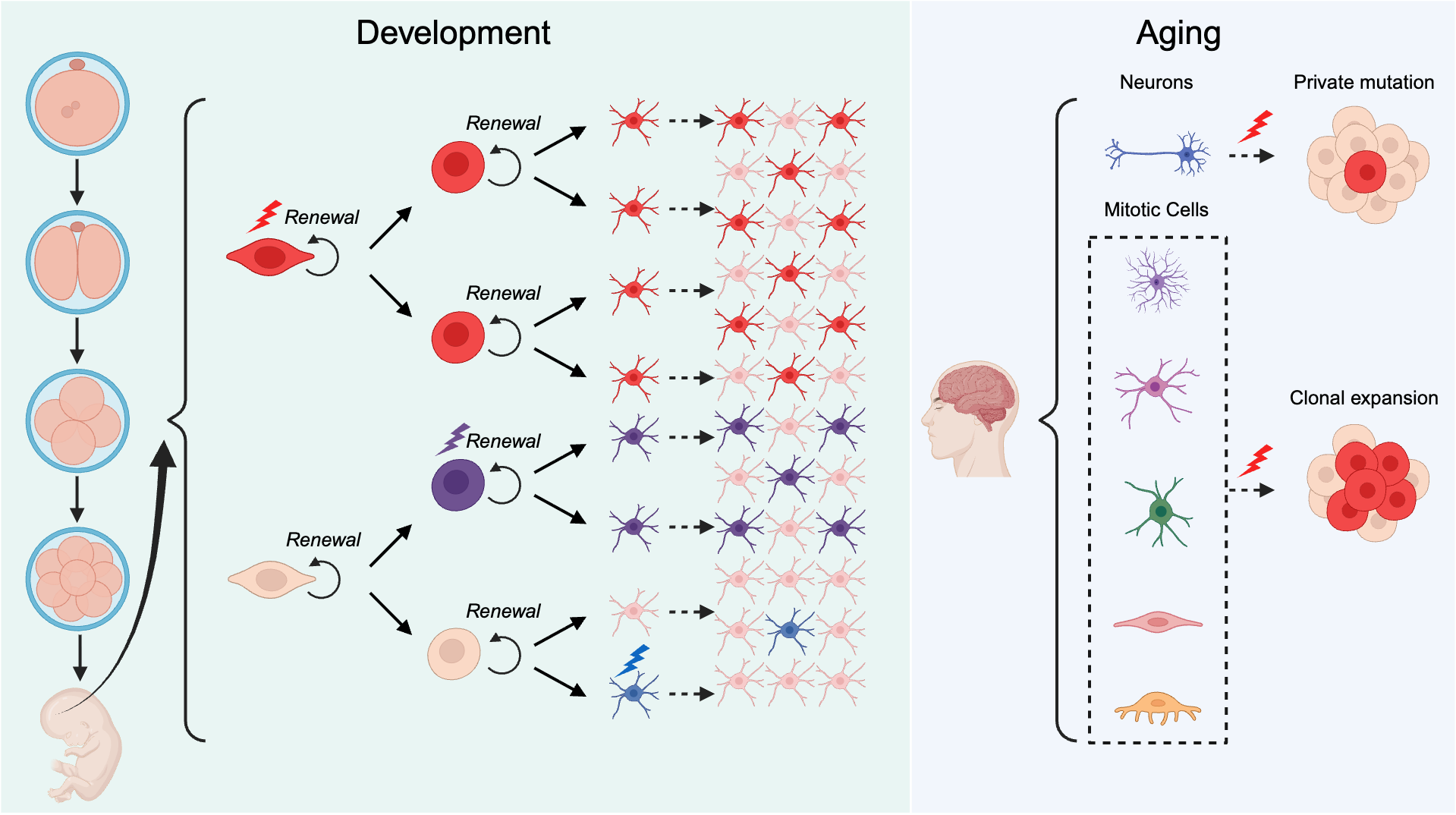
Somatic mutations can arise during development and accumulate with aging, generating genetic mosaicism in the human brain. These mutations may remain private to individual neurons and other low-proliferating cells, or expand clonally within mitotic cell populations.